Visual Programming Interface
In structured educational approaches such as TEACCH®, students use visual schedules to visualise daily activities.
From a robotics perspective, a visual schedule can be seen as a simple algorithm — a sequence of steps describing how a task is performed. This idea forms the basis of our visual programming approach.
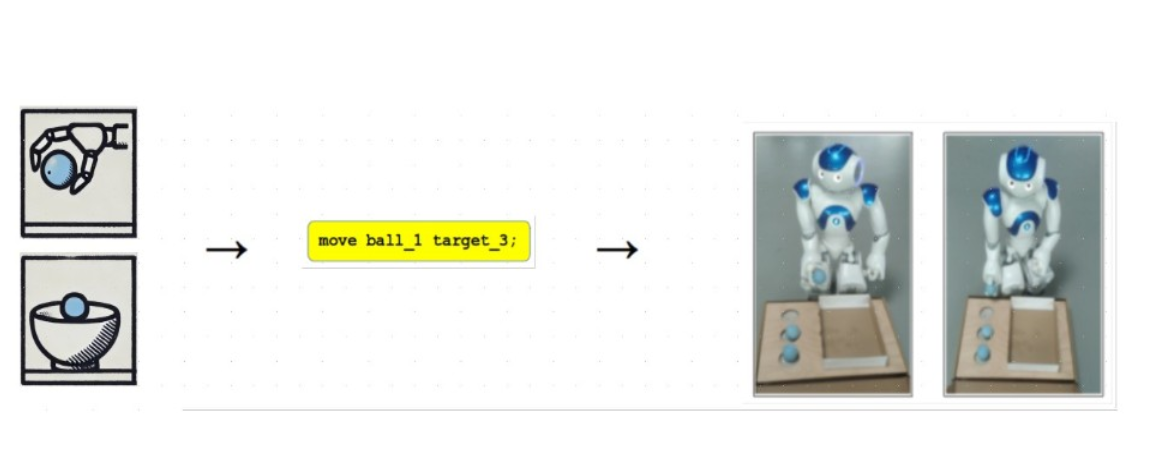
Students can build an algorithm by arranging cards with pictures, symbols, or text into a sequence, and “teach” the robot how to solve a Shoebox-task. In this way, programming becomes a natural extension of familiar educational practices.
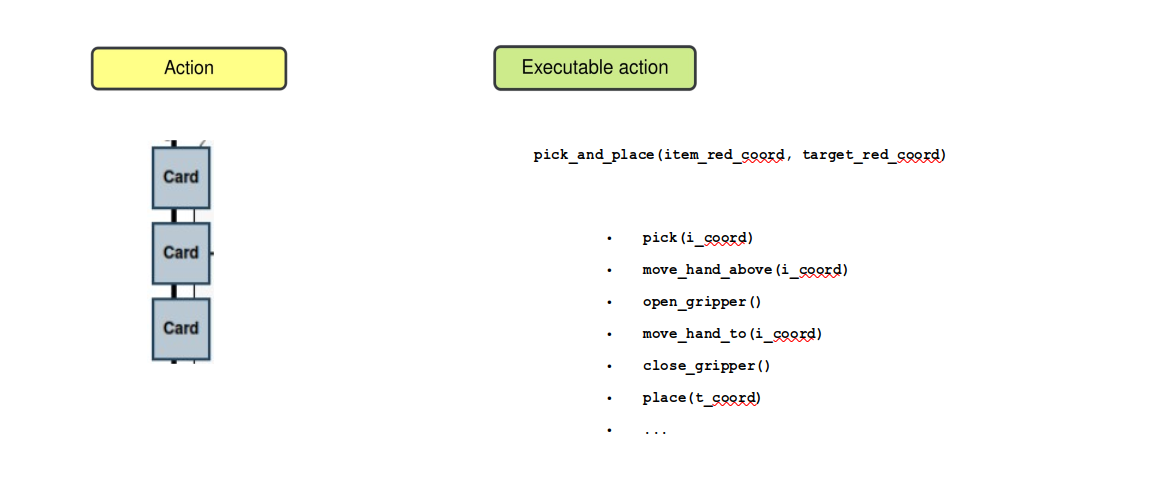
The system can be adapted to the student’s age, skills, and experience. A single card may represent a full Shoebox-task task, a robot action, or a low-level operation, enabling a gradual introduction to robotics and computational thinking.